How AllTech Services runs its 1.3 million-subscriber YouTube channel
In conversation with owner Abe Zarou about the company’s YouTube strategy, day-to-day operations, and more

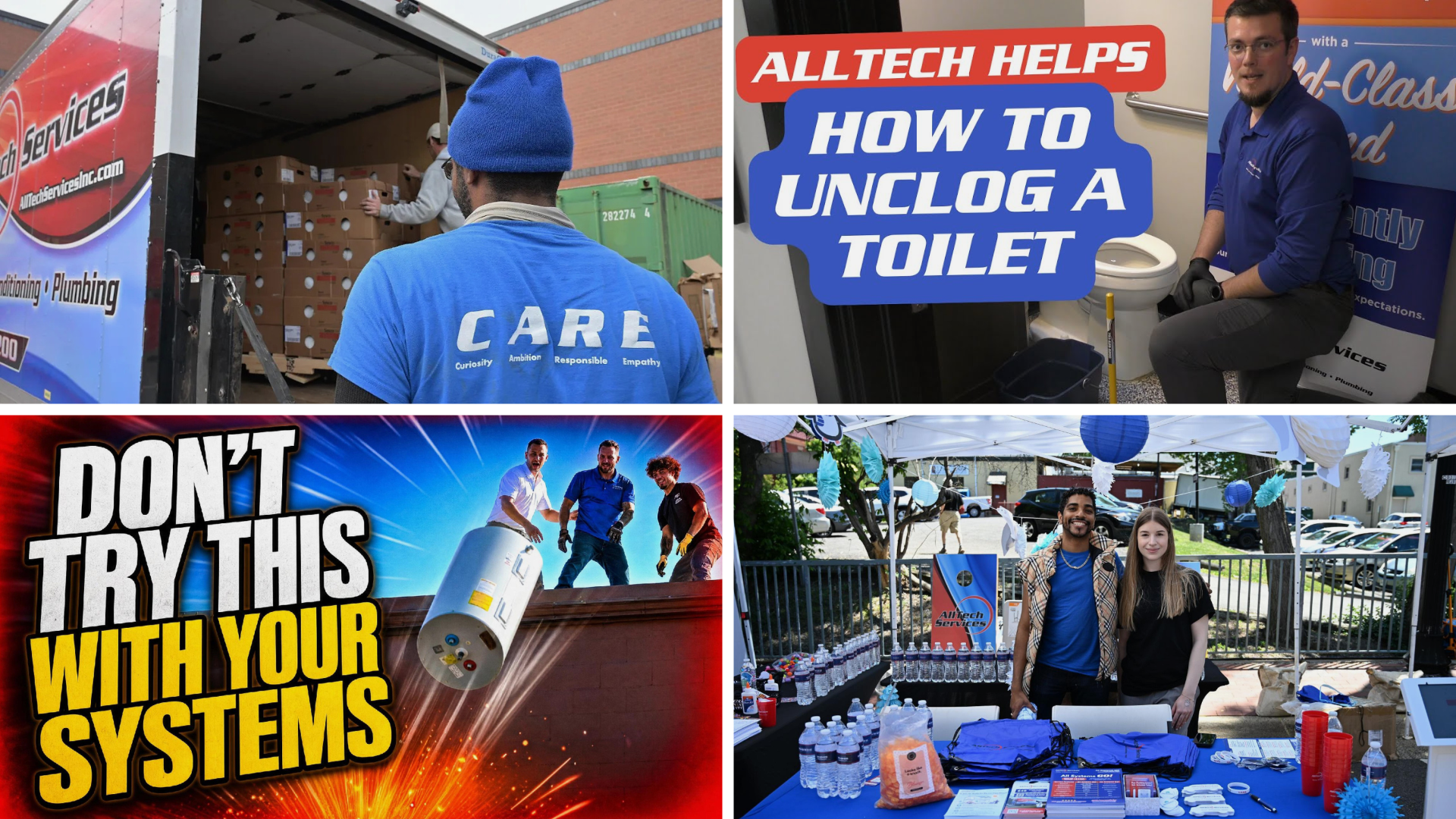
Image: AllTech Services
Over the past 21 years, YouTube has transformed from a niche video site into a global content powerhouse, ranking as the most-watched streaming service on U.S. televisions and generating over $60 billion in revenue in 2025.
What’s happening: Virginia-based HVAC and plumbing contractor AllTech Services ramped up its YouTube channel a year and a half ago — and has since crossed 1.3 million subscribers.
For a peek behind the scenes, Homepros caught up with owner Abe Zarou about the company’s YouTube strategy, day-to-day operations, and more.
This conversation has been lightly edited for brevity.
Why YouTube in the first place?
We’re privately held. We’re not owned by private equity. We were looking for a unique strategy to captivate an audience and drive attention without having to match private equity’s marketing spend. So we basically said, ‘YouTube is a low entry point.’ It’s inexpensive in my mind. It’s actually free.
We thought about it a couple of different ways, including that if we commit to it, we’re going to see it work for recruiting. Everybody is on freaking YouTube these days. They’re starting at like five years old. So we wanted to involve the team and the technicians. We have a young team. They love likes. They love videos. We wanted to have that friendly competition among the technicians and allow them to show their skills.
We also knew that consumers are using technology differently with this shift in AI. People don’t want to search through 17 different links — PPC, LSA, and all this noise.
It’s that Amazon mentality. People want instant gratification. They want a repair company to come to their house now. So the way that the whole ecosystem is shifting with these LLMs, we felt this is probably going to be the best play.
1.3 million subs is wild.
As far as the residential trades, I think we have the largest channel in the world at this point.
How did you think about video cadence at first, and has that changed?
It wasn’t perfect, but the initial strategy was one Short per day and one long-form video per week. And when we started to see the subscribership ramp up, we shifted to three Shorts a day and one long-form video every other day.
It wasn’t set in stone or documented. It was more fluid. We just said, ‘We’re going to be consistent. Some of the videos are going to be polished, and for others, we’re just gonna whip out our damn cell phone, throw that s*** up there, and see if it sticks.’
Can you help me understand the content mix?
We do a blend of videos: We tell customers about the weather and invite them to our community events. We use it internally (to project externally) for recruiting — company celebrations, events, etc. We do some weird stuff. About a week and a half ago, we threw an air handler and a water heater off the roof of our building, while I was up there screaming, and it got 300,000-400,000 views.
We also use it for informational purposes. There’s a whole lot on there that just talks about how to repair your system, how to change a filter, and what a certain noise is. We have an AllTrained section, where our technicians get detailed about checking static pressure and stuff like that.
We show people in action: Technicians out in the field servicing customers. And then we have some of our academy students on there. We’ve done Mythbusters. There’s Ask Abe, Meet the Team, and AllTech Cares. So it’s a huge blend.
Got it. Alright, a two-parter: 1) Do you put dollars behind the videos to promote them and grow your audience, and 2) do you view YouTube as a pure branding play, or also as a performance channel of sorts?
YouTube’s a bit tough to track, but we’re modest. We’ve got a $1,000-a-month ad budget for promotions.
We do use it in hopes for lead generation, because what we’ve found — and some of the data supports this — is that people are actually going to these social handles before hiring a plumbing and HVAC company, just to make sure they’re real. They’re overstepping Google and going to YouTube, because they see the videos — it feels warm, it feels good.
We have some web pixels that are dialed in with YouTube. So if we pump out some creative that gets a lot of views, we do see a little bit of a web lift. But do we have a call tracking number that we can tie to a campaign and then to revenue? No.
Is there a dedicated team that owns YouTube? What’s the structure like, if so?
Yes, it’s lean. Until about eight months ago, our director of marketing, Trevor, was 100 percent solo — scripting, directing, editing, producing, and using all of the tools. But then he came to me and said he needed help, so we brought in a marketing assistant, Alisa. Since then, she’s basically taken full control — directing, scripting, and final review.
Then, about a couple of months ago, we added Julia, who’s the brand ambassador. She’s more commonly used as a kind of voice.
But as far as having a full studio and all that great stuff, we don’t. We’ve got some nice cameras and technology, and everything is done in-house.
What are some of those technology tools?
We use Manus, CapCut, Suno, and ElevenLabs, which all do different things. ElevenLabs is for audio generation and editing. Suno is for music creation. CapCut is for caption creation. And then Manus helps with some of the research, scripting, and thumbnail generation.
Within your current cadence — three Shorts a day, one long-form every other day — are you guys scientific about the times of day that you post?
No, there’s no specific time. We film videos based on people’s availability. But we try to make them in the morning, so we have the rest of the day or a couple of hours to edit.
How do you guys come up with net-new video or series ideas?
It’s a blend of things. We ask the team — they’re creative, they have answers, and everybody’s involved. Sometimes we’ll send out an internal survey asking for ideas, or the marketing team will go around and poll people. And then we’ll just have brainstorming sessions during our huddles, and we’ll get unique ideas.
I’d also say that while Trevor might not admit it, and I’ve never asked him directly, he’s very attentive to what’s going on with YouTube in other industries. So, gathering ideas from people outside of our space and kind of making it our own to fit our audience.
When you think about the total investment, are you just including the cost of cameras and other equipment, software, your monthly ad budget, and then the direct team’s salaries?
You’re exactly right. It’s so inexpensive when you look at the big picture.
You mentioned AI earlier. So, considering that (or not), how are you thinking about the next 12 months within the YouTube context?
We’re going to continue to double and triple down on YouTube. We’re bullish on it because we see the habits of this younger generation, including internally. TikTok still has power. Instagram still has power.
But the equity that YouTube has within the ecosystem of the web, we think, will become even more valuable in the future. And we think people will continue to engage with Shorts more than ever. Plus, AI-wise, Google’s Gemini goes hand-in-hand with it.
Alright, last and most important: What’s a video you’d like to make that you haven’t been able to yet?
We want to take a water heater, fill it with propane, and shoot it with an AR-15. Talk about a crazy explosion. Everybody loves noise. They love fire. That’s something we’ve been talking about.
Sick.
Keep reading
Roto-Rooter parent targeted by activist investor
Chemed’s stock price has fallen by just over 20 percent over the past year — and is down more than 30 percent from its 2024 peak
Most-Read: September
A roundup of our five most-read stories from September

Charted: 20 years of HVAC shipments
While annual shipment volumes have grown steadily since the Great Financial Crisis, 2025 saw the fewest combined units shipped since 2016