America’s skilled trades moment: Philanthropy, Big Tech, and Wall Street pledge $555 million
“The future of our country depends on the skilled trades,” Ford CEO Jim Farley said Monday

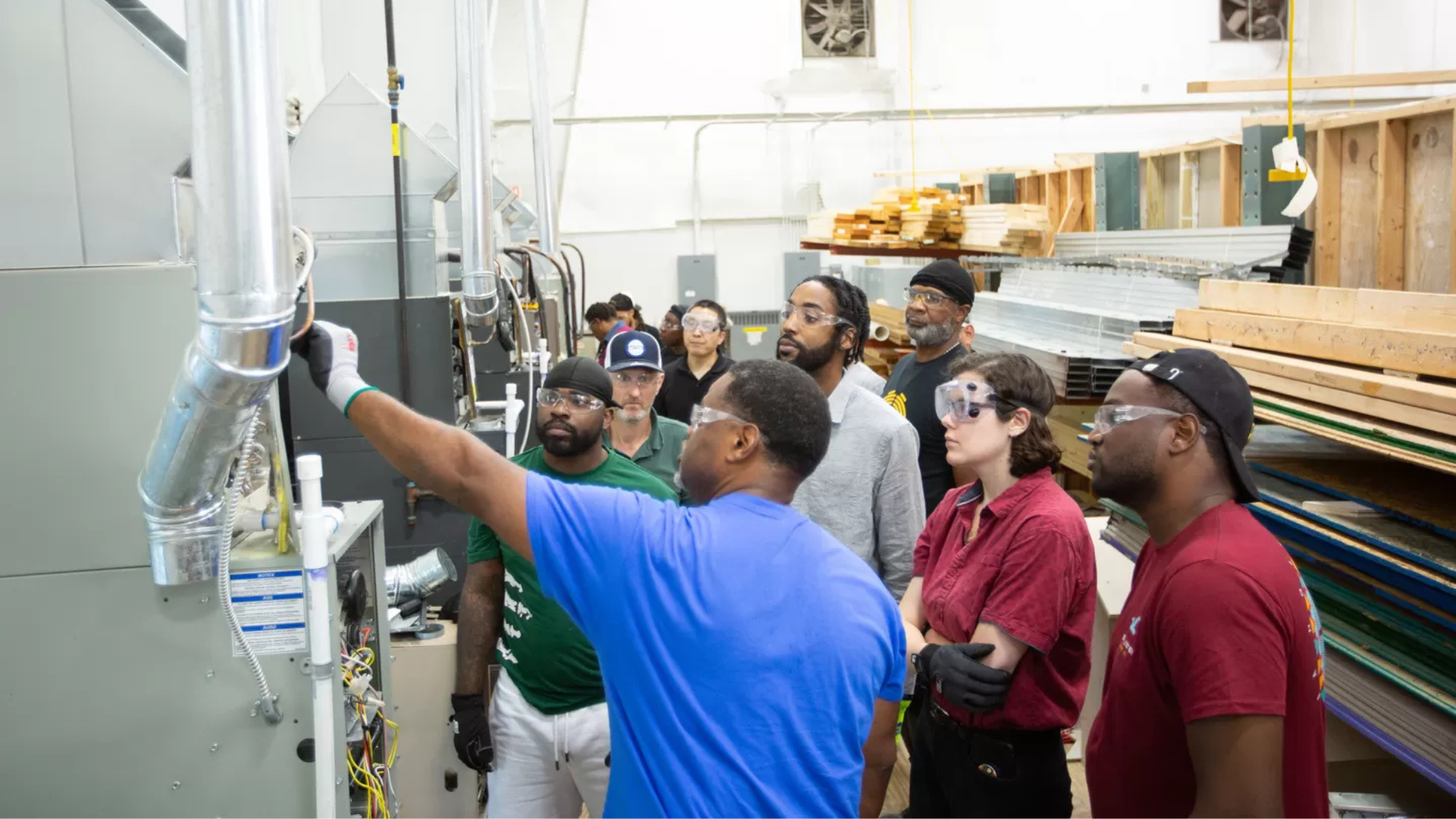
Image: The Lowe's Foundation
Four U.S. organizations have committed a total of $555 million to help bolster America’s skilled trades workforce.
Why it matters: That’s within the past 75 days.
What’s happening: Bloomberg Philanthropies, the financial news and data company’s philanthropic arm, on Monday announced a $90 million, nine-region initiative to connect high school students directly to paid training opportunities and Registered Apprenticeships in the HVAC, plumbing, and electrical trades, among others.
- “The initiative will provide coursework and paid on-the-job training for approximately 15,000 students across Boston, MA; Chattanooga, TN; Detroit, MI; Houston, TX; Raleigh, NC; Richmond, VA; St. Louis, MO; Washington, D.C.; and the state of New Jersey,” an announcement states.
- Bloomberg Philanthropies launched the effort alongside dozens of local unions, school districts, governments, and employers, including Ford — and local contractors.
Enter Big Tech: Facebook-parent Meta, also on Monday, announced that it will invest $115 million to launch “America’s Workforce Academy,” a free, five-week training program — dubbed a “fast track to a long-term career in a skilled trade” — guaranteeing graduates a job at one of its data centers.
- “This is the largest private-sector commitment to the skilled trades with a job guarantee in American history,” the company said in a statement. “This program will launch in Louisiana, Ohio, Indiana, and Texas as the 2026 pilot locations.”
Zoom out: Monday’s announcements represent just over a third of the $555 million pledged. In April, the Lowe’s Foundation committed $250 million to train 250,000 skilled trades workers over the next nine years, following an initial $50 million investment announced in 2023.
- Just one month later, BlackRock, the world’s largest asset manager, said it will deploy $100 million to nonprofits and workforce development organizations across the U.S. over the next five years to strengthen and scale skilled trades programs, impacting a projected 50,000 workers.
The big picture: The pledges come as both interest in the trades among America’s youth and employer demand for qualified talent are rising, fueled in part by AI anxiety hanging over the white-collar workforce and the data center building boom.
- Roughly 165,000 collective annual job openings for HVAC technicians and installers, plumbers and pipefitters, and electricians are projected from 2024 to 2034, according to the Bureau of Labor Statistics (BLS).
- This spring, U.S. enrollment in HVAC-specific programs at public two-year colleges grew 16.7 percent year-over-year, the second consecutive year of double-digit growth, as Homepros recently reported.
- And U.S. trade and technical schools generated $5.1 billion in revenue in the fourth quarter of 2025, up 41 percent from four years earlier, the Wall Street Journal reported, citing federal data.
What we’re watching: The Trump administration has also put the trades in focus. As soon as July 1, U.S. students will be able to tap Pell Grants — historically reserved for low-income students pursuing college degrees — to help pay for short-term workforce training programs, including the skilled trades.
What they’re saying: “The future of our country depends on the skilled trades,” Ford CEO Jim Farley said Monday.
- “Millions of good-paying jobs are going unfilled, and too many students never get a chance to learn the skills necessary to get them,” added Bloomberg founder Mike Bloomberg. “Jobs in the skilled trades helped build America’s middle class, and now they can help a new generation enter and strengthen it.”
The bottom line: The trades are sexier than ever.
Keep reading

Skilled trades expo to hit Patriots stadium
Bring Back the Trades, a skilled trades-focused nonprofit, will host an upcoming 'Skills Expo' at Gillette Stadium

Home services startup Tetra lands $10.5 million for expansion
December 26, 2023

Tech giants should pay for residential HVAC installs, reports suggest
In recent months, some energy analysts have proposed a way for tech companies to free up grid capacity amid the AI-driven data center boom