Mid-year temp check: How consumers are doing
A five-year look at Americans' economic situation, honing in on seven key indicators from the Federal Reserve, as of June 2025


Image: Freepik
To get a snapshot of Americans’ economic situation, given its impact on consumers’ ability to afford repairs and replacements, Homepros looked at fresh Federal Reserve data over the past five years, honing in on seven key indicators as of June 2025, the latest available figures.
Consumer Spending
Total consumer spending, in billions
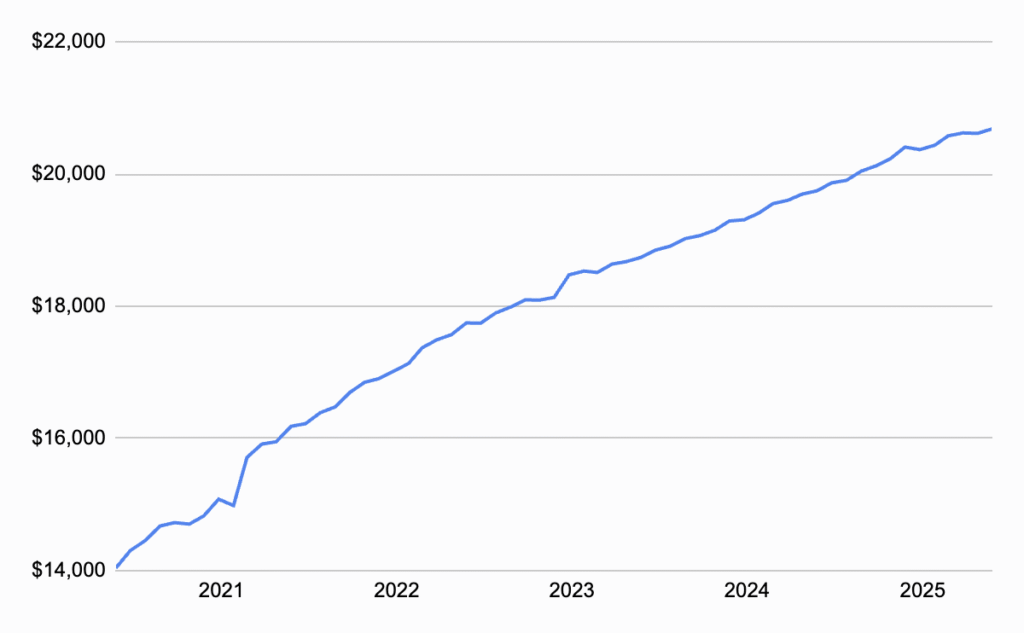
Consumer spending, including everything from food and beverages to housing to HVAC purchases, provides insight into the overall health of the economy.
The figure rose 4.7 percent from June 2024 to June 2025 and is up 47 percent since June 2020, when the world was grappling with Covid. The highest share of consumer spending — 17.5 percent — was on health care, followed by housing at 16.3 percent, according to the Bureau of Economic Analysis (BEA).
Disposable Income
Personal incomes less taxes and inflation, in billions
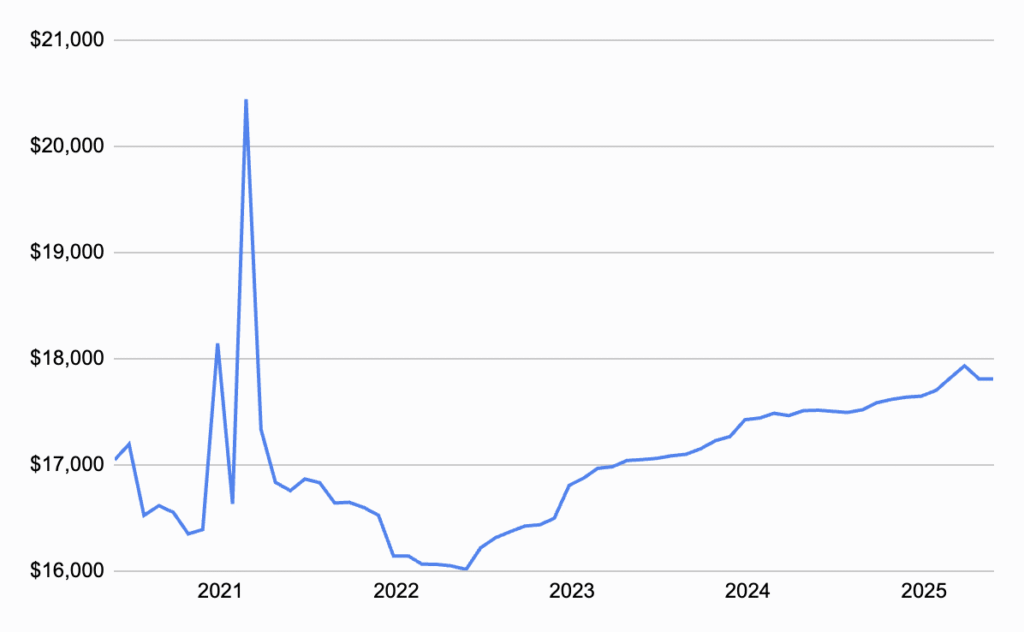
Americans’ real disposable income rose 1.7 percent year-over-year from June 2024 to June 2025. The “increase in current-dollar personal income in June primarily reflected increases in government social benefits to persons and in compensation,” the BEA noted in a news release. Compared to June 2020, the figure is up 4.5 percent.
Consumer Sentiment
A measure of consumer confidence
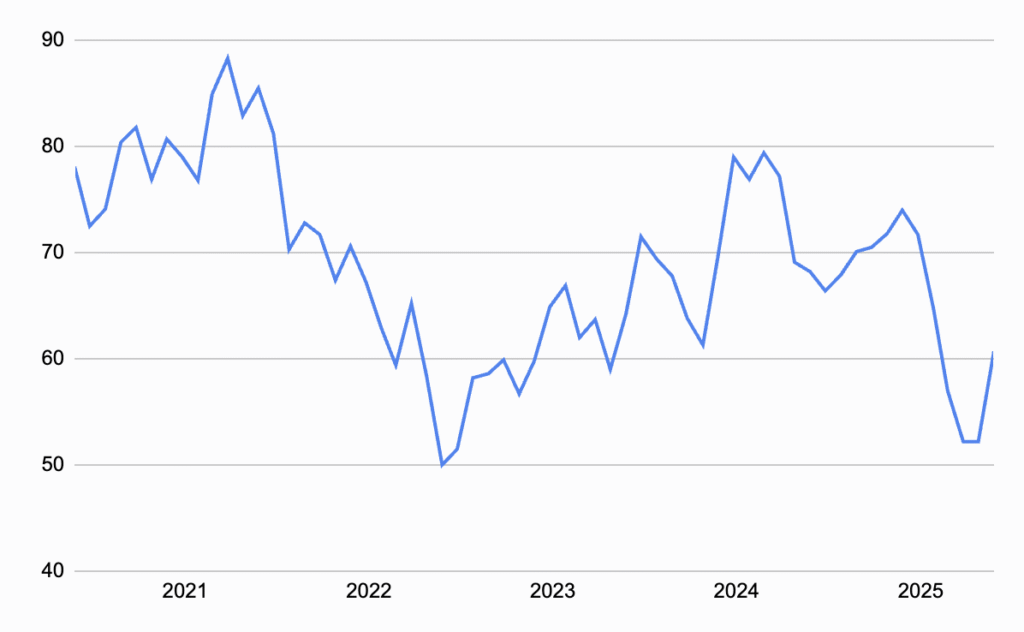
Consumer sentiment has fluctuated steeply over the years, but is down 18 percent since December 2024, as of this June, and down 22 percent compared to June 2020. However, the figure is up 21 percent from its low point over the past five years, in June 2022.
Personal Savings Rate
Personal savings as a percentage of disposable income
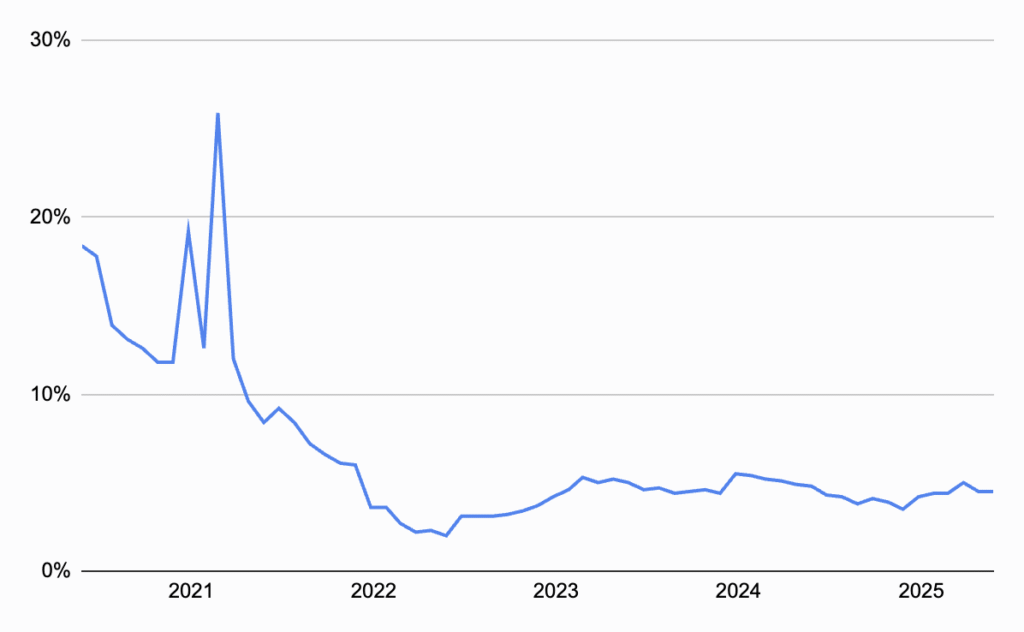
When individuals set money aside, it suggests financial stability and an ability to handle unexpected expenses. Consumers saved 4.5 percent of their disposable income in June 2025, down slightly from the same month last year, and down 75 percent from June 2020, when Covid-era stimulus payments boosted the rate to 18.4 percent.
Debt to Income
Total household debt payments as a percentage of disposable income
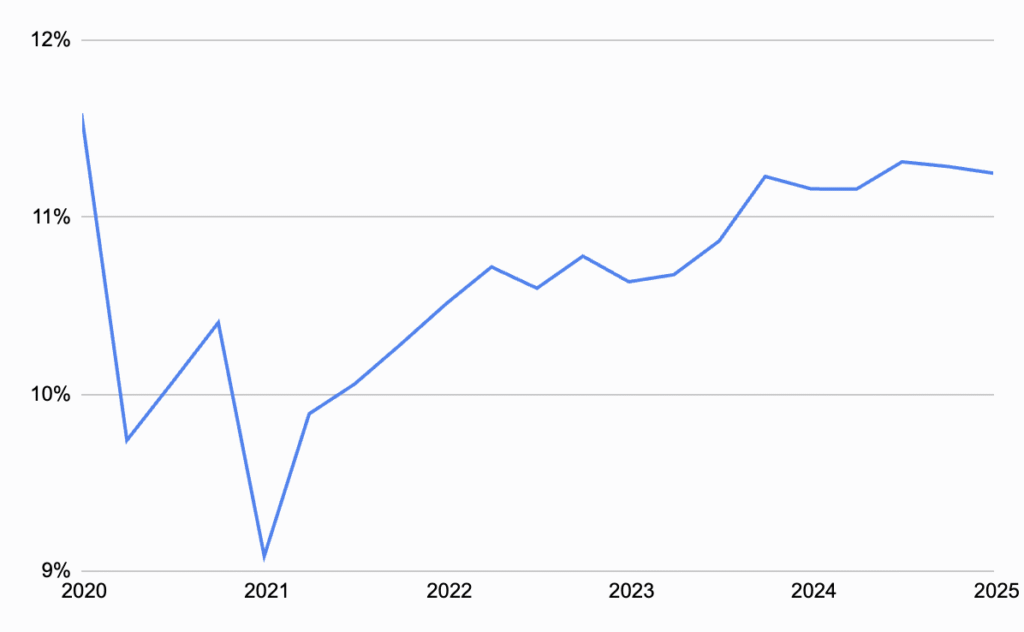
Household debt payments, including mortgages and other loans, made up a slightly smaller percentage of Americans’ disposable income as of the first quarter of 2025 (the latest available data) compared to the same quarter in 2020. In Q1 2025, they made up 11.2 percent of disposable income, down three percent from Q1 2020.
Credit Card Delinquencies
The percentage of credit card accounts at least 30 days past due
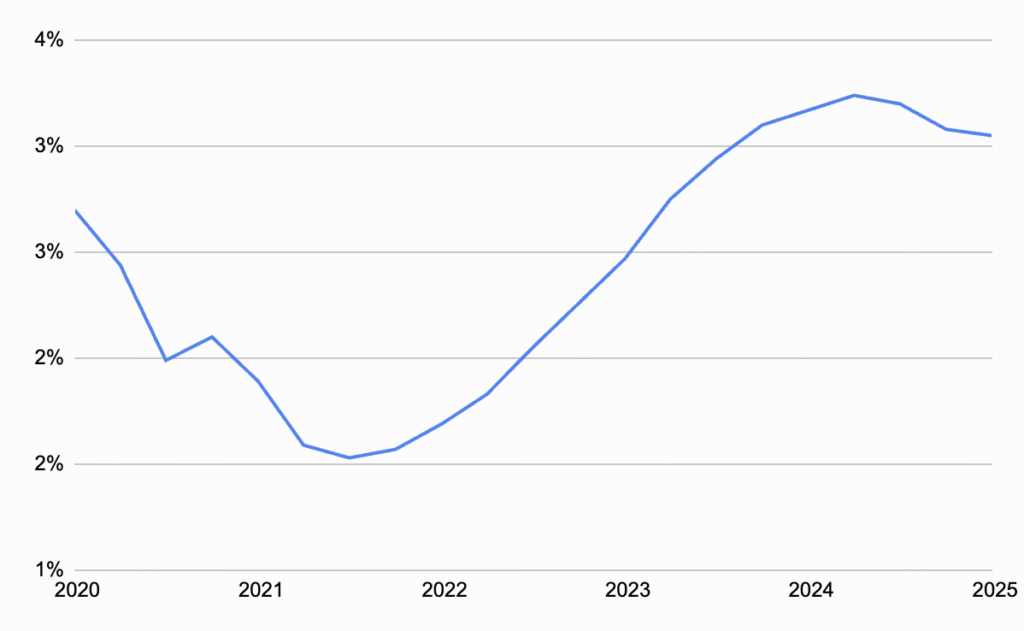
A larger share of Americans are falling behind on their credit card payments compared to five years ago. Data showed that 3.05 percent of credit card accounts at all commercial banks are at least 30 days late on their payments. The figure rose by 13 percent from Q1 2020 to Q1 2025, and is nearly double the post-pandemic low (Q3 2021), when just 1.5 percent of accounts were at least 30 days late.
Home Prices
The average price of existing single-family homes
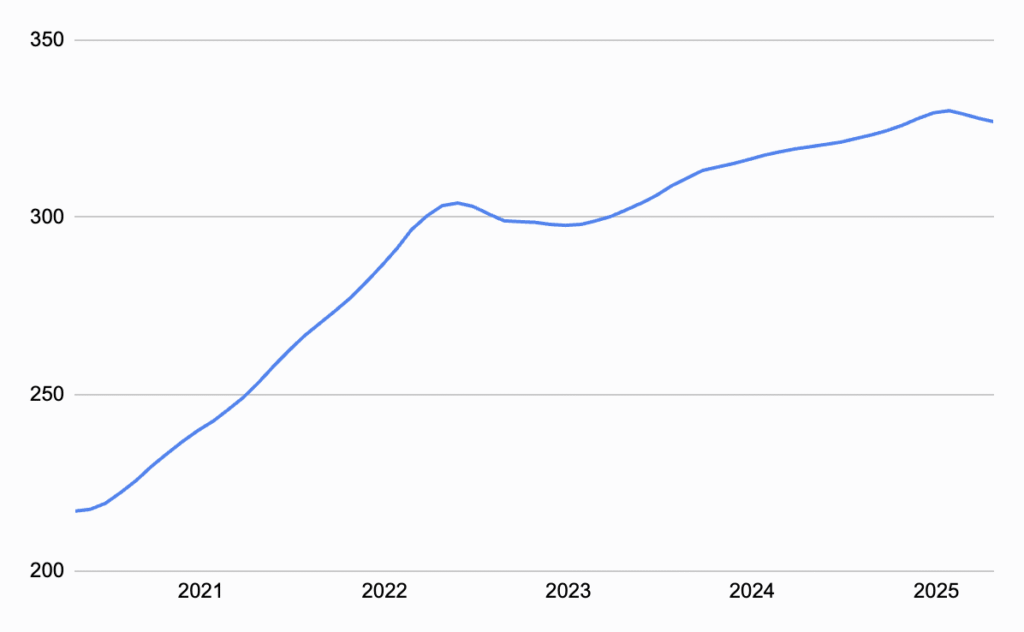
The ‘Case-Shiller’ index, which tracks changes in sales prices of single-family homes across the country, is up a steep 50.7 percent from May 2020, reflecting home prices’ relentless march upward since the pandemic. The median sales price of new houses sold was $401,800 in June 2025, according to the Census Bureau.
Editor’s note: All data was sourced from the Federal Reserve’s online economic database.
Keep reading

PHCC revamps national HVAC contest, crowns winners
Organizers say the improved format better positions the contest as a top pipeline for the industry’s most skilled labor

Trade court rules Trump’s 10% global tariffs illegal
The president told reporters that his administration would find “a different way” to impose tariffs, and the administration is expected to appeal the ruling

HVAC distributor sales fell in May: HARDI
"With a lot of difficult weather comps across the country during the next couple of months, we need that summer magic to cook up some demand"
