Senators urge DOE to withdraw proposed appliance standards rule
The proposal would update the agency’s “Process Rule” used to establish energy conservation standards for household appliances and equipment, including air conditioners and water heaters

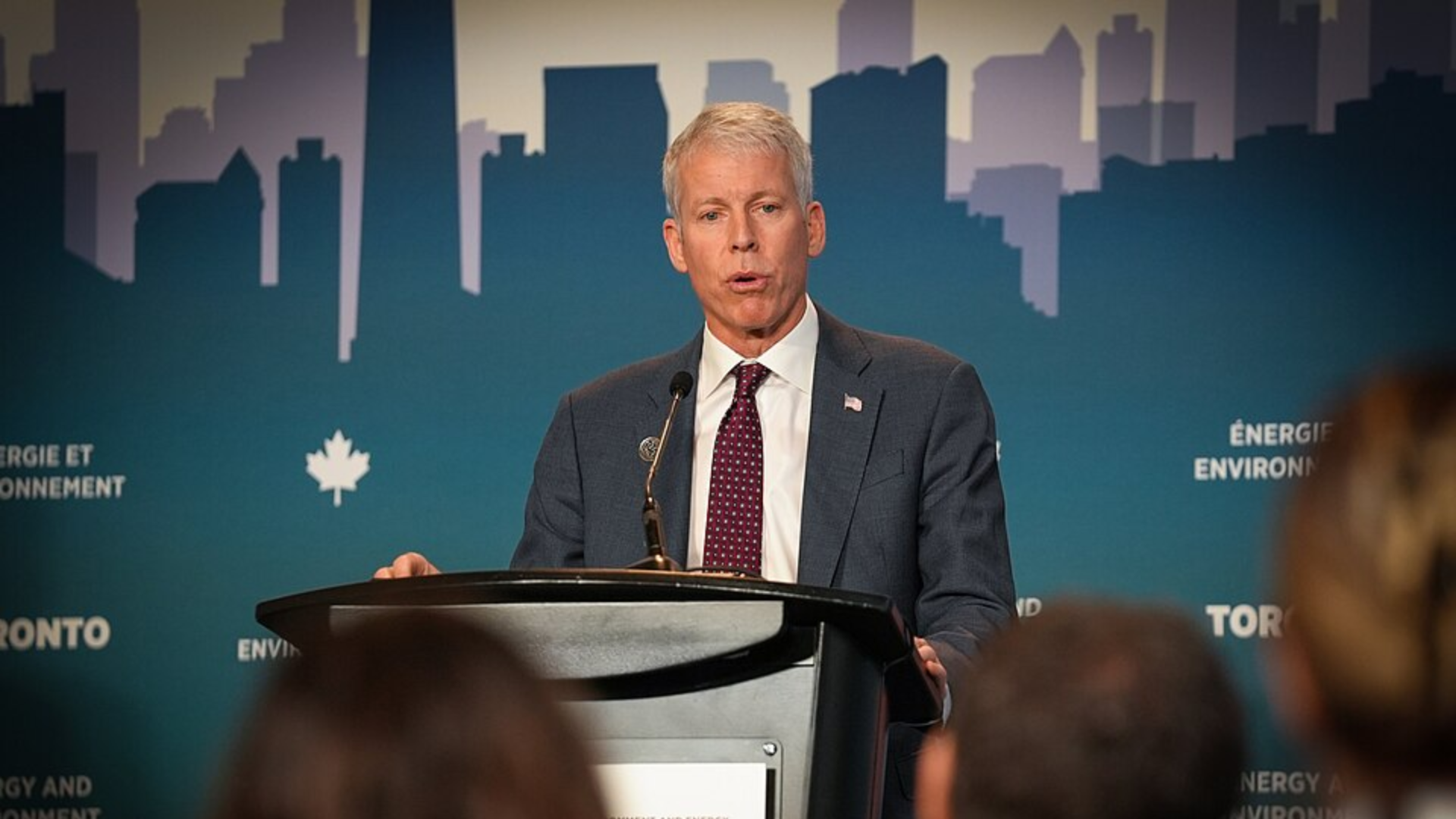
Image: Energy Secretary Chris Wright / Wikimedia Commons
A group of 18 U.S. Senators is opposing a Department of Energy proposal that would change how the agency adopts appliance efficiency standards.
Catch up quick: On July 2, the DOE published a 192-page Notice of Proposed Rulemaking to “permanently end home appliance and equipment mandates that raise costs and disrupt consumer choice.”
- The proposal would update the agency’s “Process Rule” used to establish energy conservation standards for household appliances and equipment, including air conditioners and water heaters, according to a news release.
- It would not, however, repeal existing energy efficiency standards or prevent future ones, despite the announcement’s framing.
What’s happening: “This is concerning as energy efficiency standards save American families and businesses billions of dollars a year, and Congress explicitly directed DOE to carry out the program faithfully,” the Senators wrote in a joint letter to Energy Secretary Chris Wright on Wednesday.
- “Under current statute, DOE is required to consider consumer impacts, manufacturer impacts, technological feasibility, and economic justification before finalizing a standard,” they added. “The proposed rule would layer on needless additional requirements.”
Of note: The Senators’ letter comes eight days after 39 U.S. Representatives submitted a similar letter to the DOE.
The big picture: Critics call the potential changes “roadblocks” that would cost Americans millions of dollars each year and hinder decades of technological progress. Proponents laud the move as one that could create industry stability and provide Americans with greater purchasing freedom.
- Existing efficiency standards in 2024 reduced total U.S. energy consumption by 6.5 percent and saved the average household $576, the Senators wrote, citing a study from the Lawrence Berkeley National Laboratory.
- “By eliminating this program going forward, the Trump Administration would increase utility bills for households by $150 each year,” they added.
The other side: “For too long, the American people paid the price for mandates that restricted consumer choice and drove up costs. President Trump promised to end this nonsense, and that is exactly what we are doing,” Wright said in July.
- “This proposed rule will preserve the American people’s ability to choose home appliances and equipment that actually work — at prices they can afford,” he added.
Looking ahead: Both letters urged the DOE to withdraw its proposed rule.
The Department of Energy, as well as representatives for New Mexico Senator Martin Heinrich, who led Wednesday’s letter, didn’t return requests for comment by press time.
Keep reading

HVAC wholesale prices rise 1.8% in June, extend multi-year climb
U.S. wholesale prices of HVAC equipment in June rose 1.8 percent from May, the biggest monthly jump since January, per the Bureau of Labor Statistics

$3 billion later with SF&P Advisors’ Fred Silberstein
January 15, 2024

Bay Area moves to loosen first-of-its-kind gas water heater ban
The Bay Area Air District (BAAD) may loosen a first-of-its-kind rule that would effectively phase out certain gas-powered water heaters