Asphalt shingle shipments fell 9.9% in Q1
The roofing industry experienced a slow start in 2026, with year-over-year shipment declines across all major product lines

Image: Ryan Stephens/Pexels
U.S. asphalt shingle shipments fell 9.9 percent year-over-year in the first quarter of 2026, according to recently released data from the Asphalt Roofing Manufacturers Association (ARMA).
What’s happening: Just over 38 million squares were shipped during the quarter, down from roughly 42 million in the same period last year.
- Zoom in: Built-up roofing (BUR), ply, and mineral cap sheet shipments fell 16.7 percent year-over-year, according to the release, while shipments of modified bitumen declined by 13.8 percent.
- The Canadian market also fell during the first quarter, with shingle shipments dropping 13.4 percent compared to the same period last year.
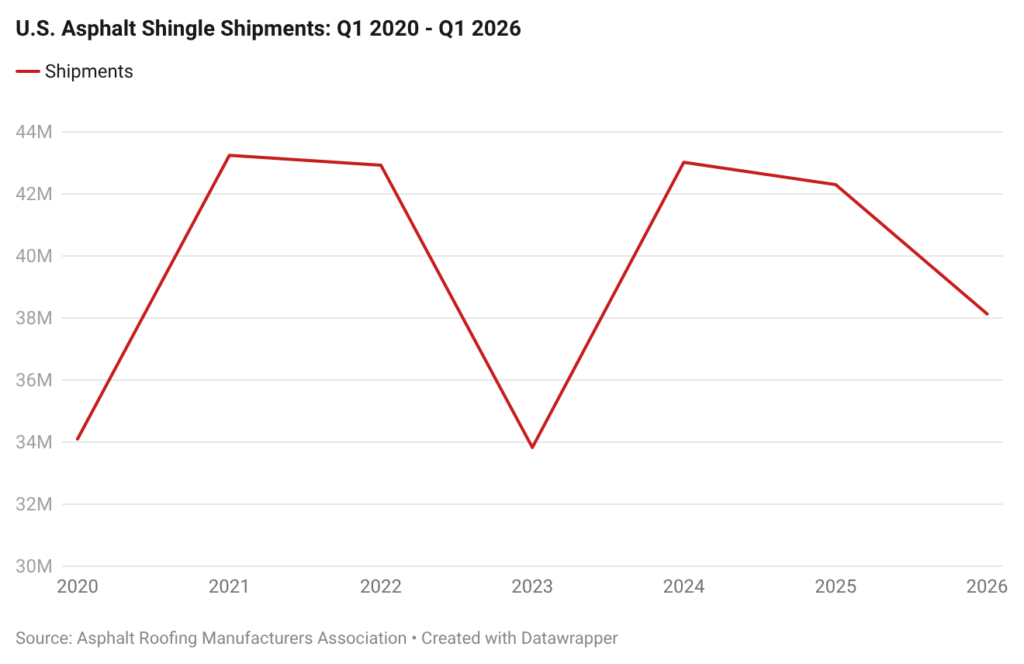
The big picture: Shingle shipments have been volatile in recent years, surging during COVID — and remaining elevated through 2022 — before falling sharply (21.2 percent year-over-year) in Q1 2023.
- The market rebounded in 2024, with Q1 shipments rising 27.2 percent year-over-year; however, since then, Q1 shipment volumes have declined steadily, now sitting at near-2023 levels.
Keep reading

Heat pumps lead space-heating market share in first half of 2026: Report
The appliances accounted for 58 percent of space-heating equipment shipments from January through June, despite the loss of a federal tax credit

Home improvement demand hit by uncertainty, housing pressure
Ongoing consumer uncertainty and continued pressure on the housing market are impacting home improvement demand, said Home Depot's CFO

A.O. Smith sued over plastic drain valves
The suit alleges that the company uses plastic, glass–filled nylon drain valves on its residential water heaters, promoting them as cost-effective alternatives to brass valves