Charted: Where U.S. household debt payments stand
In the first quarter of this year, household debt payments represented 11.16 percent of disposable income, according to the Federal Reserve


Image: Inkdrop
The Federal Reserve publishes a quarterly figure called the “Household Debt Service Ratio,” with the latest release — for Q1 2026 — out this week.
Why it matters: The figure measures household debt service payments — both mortgage and consumer debt, including credit cards and student loans — as a percentage of disposable income, serving as a useful proxy for consumers’ financial position, and in turn, their ability to shoulder big-ticket purchases, including HVAC systems.
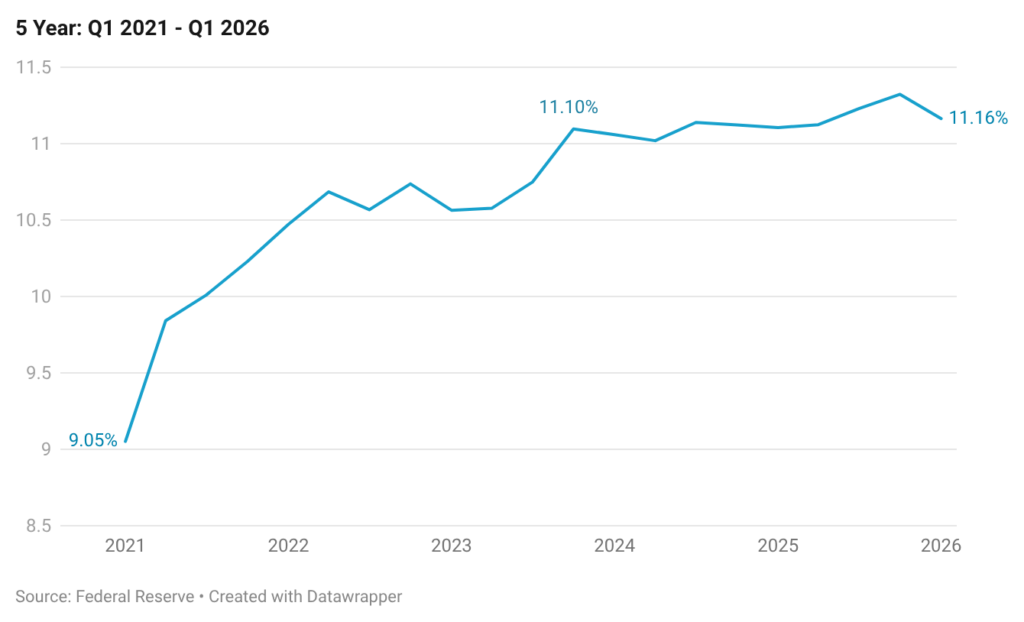
What’s happening: In the first quarter of this year, such debt payments represented 11.16 percent of disposable income, according to the release, down slightly from Q4 2025 but holding roughly steady since the fourth quarter of 2023.
- The figure has risen roughly two percentage points since Q1 2021, its Covid-era bottom, when federal stimulus and select loan pauses temporarily pushed debt payments down to about nine percent of disposable income.
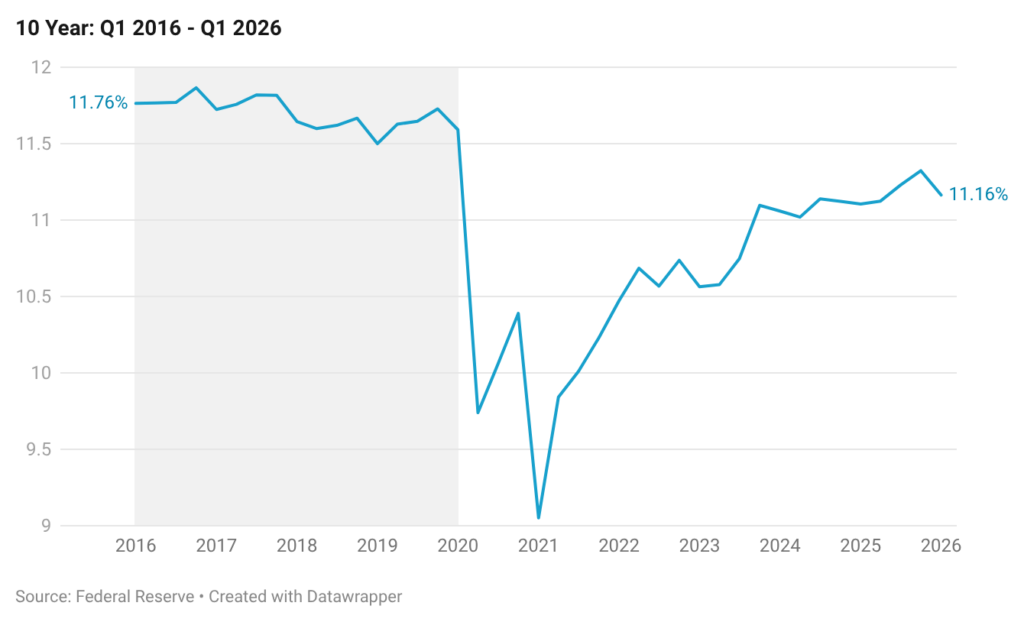
Yes, but: Despite the rise over the past five years, the ratio remains below pre-Covid levels, when it hovered between roughly 11.5 and 11.8 percent from 2016 to the beginning of 2020.
Keep reading

Industry Voices: Snowball Industries’ Jim Cosmas
October 6, 2023

Colorado State University reduces 2026 Atlantic hurricane outlook
CSU now expects 11 named storms and five hurricanes in the Atlantic basin this season, down from its April forecast

Trump’s first 60 days: The impact on the HVAC industry
A look at several initiatives, including tariffs, energy efficiency regulations, and rebates from the President's first 60 days