AC, heat pump unit volumes split by efficiency rating: HARDI
HARDI distributors’ combined unit volumes for air conditioners, heat pumps, and furnaces fell 8.2 percent over the 12 months through May 2026, compared to the prior 12-month period. But that decline isn’t uniform

Image: Adobe
HARDI distributors’ combined unit volumes for air conditioners, heat pumps, and furnaces fell 8.2 percent over the 12 months through May 2026, compared to the prior 12-month period, the association shared in a July email to its members.
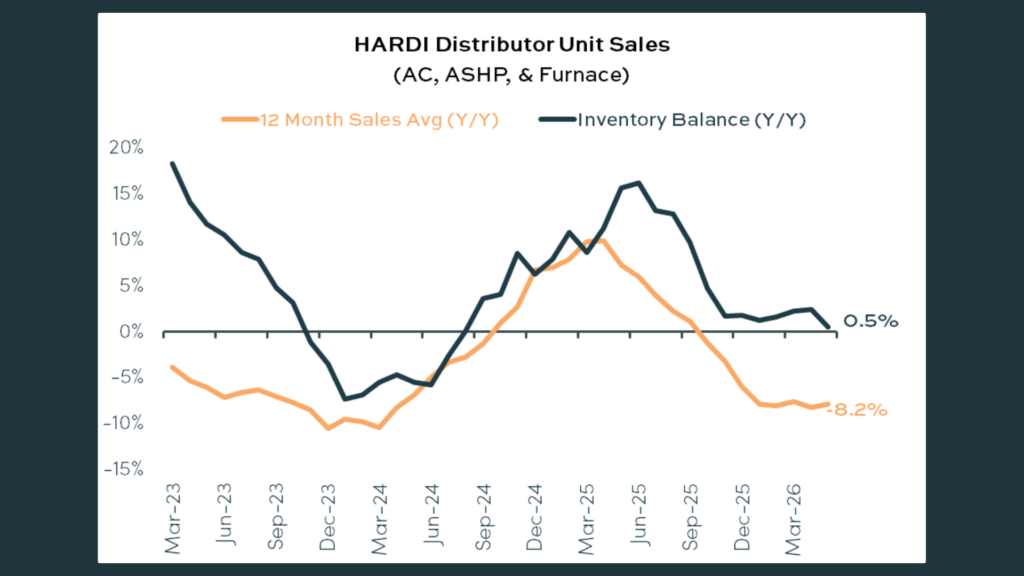
What’s happening: “The HVAC industry saw a period of strong growth in 2024, driven largely by pre-buy activity ahead of the A2L refrigerant transition,” HARDI analyst Grace Helser wrote.
- “Now the industry is on the other side of that surge; the pendulum has swung in the opposite direction as distributors try to work through their elevated inventories in an uncertain economic environment,” she added.
Yes, but: That decline isn’t uniform.
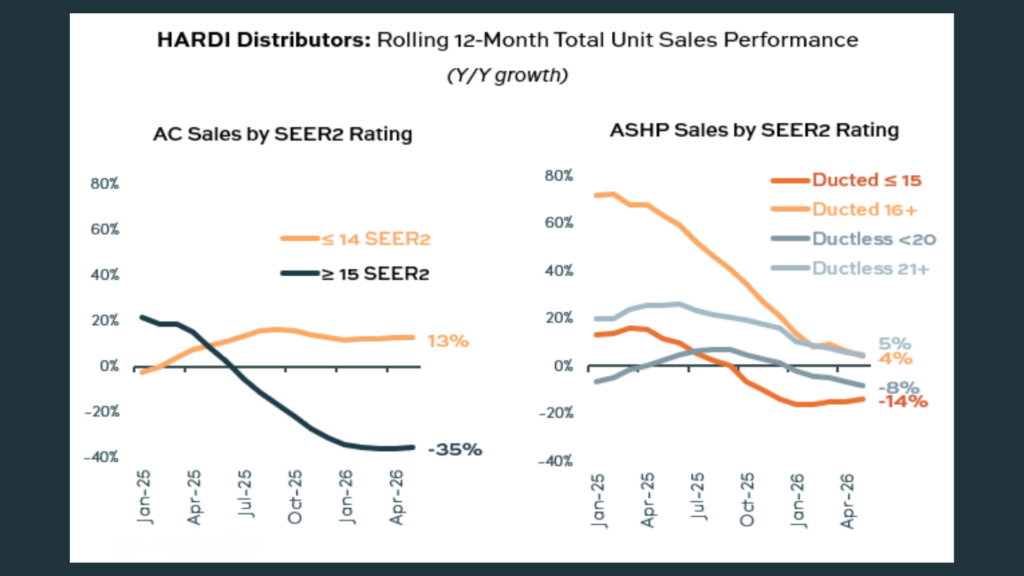
Zoom in: Unit volumes for air conditioners rated 15 SEER2 and above, in particular, declined by 35 percent over the same period, while base-efficiency ACs — those rated 14 SEER2 or lower — grew 13 percent, according to the report.
- State of play: “ACs with a SEER2 rating of 14 or lower made up 57% of the volume sold in May 2026, compared to 52% in May 2025,” Helser noted.
Meanwhile, heat pumps ran the other way, with higher-efficiency ductless and ducted units growing over the period, while ductless units rated below 20 SEER2 fell eight percent and ducted units rated 15 SEER2 or lower fell 14 percent.
The big picture: That divergence isn’t new, as HARDI previously noted, with the share of base-efficiency ACs among distributor sales climbing since 2024, while the share of lower-efficiency heat pumps has fallen.
What they’re saying: While there’s “no simple answer,” Tim Fisher, director of research at HARDI, told Homepros in an email, “The reason the AC shift is more pronounced likely has more to do with differences between consumer groups and rebate availability for heat pumps.”
- “Nothing we’ve seen to date suggests that this trend toward lower-efficiency [AC] units is shifting,” he added. “The market itself remains slow, and our expectations currently are that the next several months will look a lot like the present.”
Looking ahead: On overall volumes, “We do expect to see higher unitary growth rates in the months ahead, but that will be the result of both distributors and manufacturers lapping the sharply negative growth rates of 2025,” Fisher said. “Higher growth rates should not be considered a sign that the market is materially improving.”
Of note: The report’s data comes from voluntary distributor submissions and reflects an estimated ~25 percent of the total market volume, according to Fisher. The efficiency figures also exclusively capture residential products.
Keep reading

U.S., Mexico wrap first set of talks over trade deal shielding HVAC products from tariffs
“The United States continues to emphasize the importance of ensuring the Agreement benefits U.S. businesses of all sizes,” the Office of the U.S. Trade Rep. wrote in a statement

U.S. cooling demand: Summer snapshot
A look at U.S. cooling degree days, the primary measure of cooling demand, from June through August, compared to last year
HVAC tech awarded $75 million in lawsuit
A Michigan jury this week delivered a record-breaking verdict, following an R-22 explosion that cost an HVAC tech most of his hands
