Data centers pose challenges for U.S. water systems: Study
To meet demand, the U.S. needs $10 billion in new water capacity — or up to $58 billion in a high-growth scenario

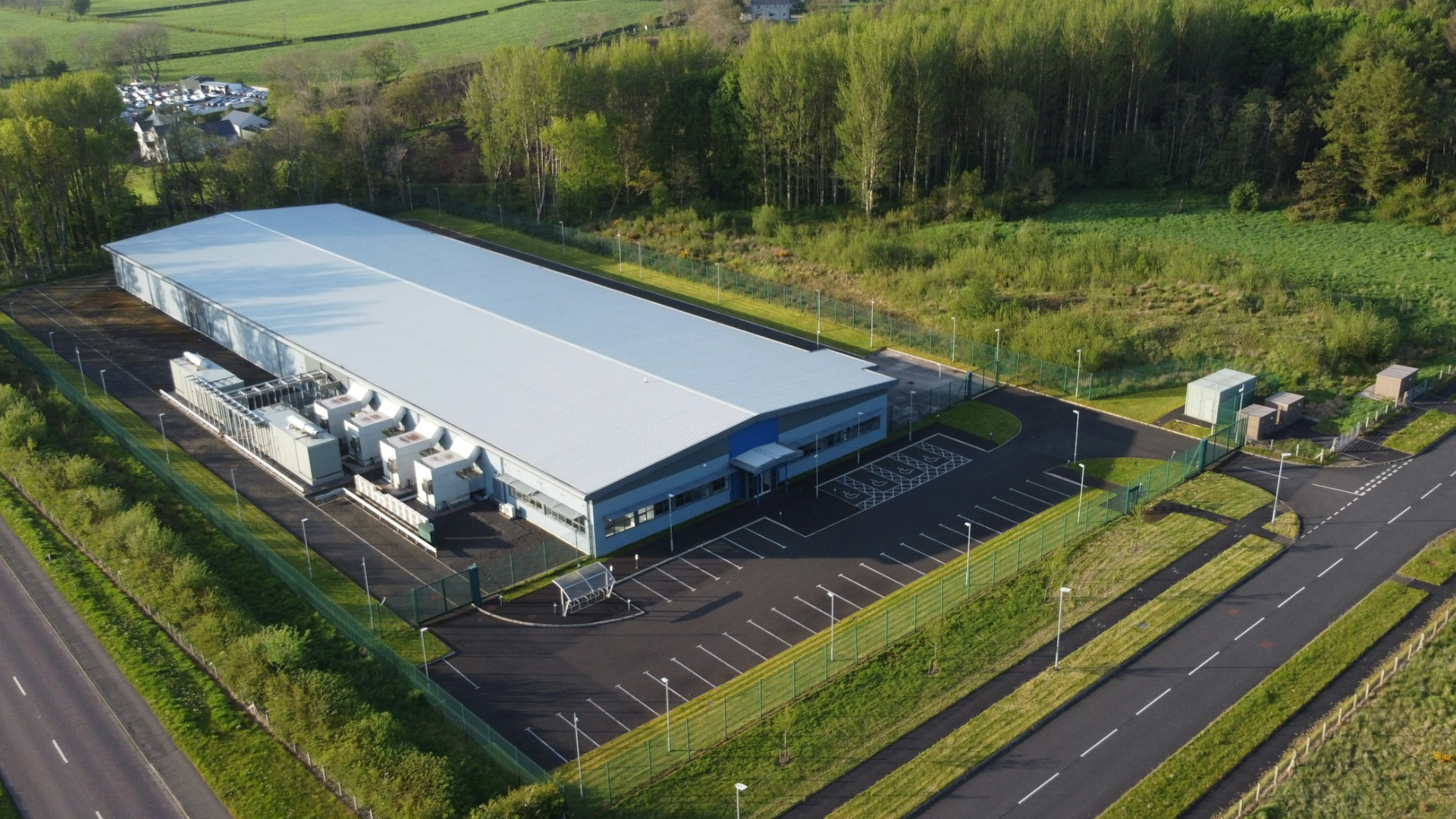
Image: Geoffrey Moffett / Unsplash
A study by a team of U.S. researchers examined the amounts of water being used to cool data centers, and warned that many communities across the country do not have the available capacity to supply them at peak times, especially during the hottest days of the year.
What’s happening: While other studies have largely focused on data centers’ annual water usage, the new study, published in early March, emphasized usage specifically during peak times.
- During such periods, it found, data centers can use six to 10 times more water than average. A large data center’s water usage might exceed one million gallons per day, and “some facilities under construction have been allocated up to 8 million gallons daily.”
- By 2030, it adds, data center cooling systems could require 697 million to 1.45 billion gallons of additional peak water capacity per day, comparable to New York City’s average daily supply.
Go deeper: Much of the water used by data centers is lost to evaporation rather than returned to the system as wastewater. “Specifically, data centers typically exhibit high consumptive water ratios, ranging from 70 to 90%, in contrast to urban residential homes that consume only 5–15% of their total water withdrawals,” the study notes.
- Without substantial upgrades, even large water systems — including the one in Loudoun County, Virginia, a.k.a. “Data Center Alley,” which serves over 300,000 residents and roughly 200 data centers — may not be able to handle total capacity needs during summers.
- The report projects that “data centers’ total water withdrawal in 2030 accounts for 0.6%–1.1% of total public water withdrawals in the contiguous United States, while their water consumption reaches 4%–7% of total public water consumption due to the high consumptive ratio.”
What we’re watching: To meet demand, the U.S. needs $10 billion in new water capacity — or up to $58 billion in a high-growth scenario.
- The report recommends that data centers disclose their water usage not just annually, but also for peaks; provide funding for local water system upgrades; and become ‘pipe neutral,’ adding new capacity to meet their needs and avoiding increased costs for local ratepayers.
- Furthermore, it calls for better coordination between water and electric systems. Data centers could use waterless, dry cooling such as fans or vapor-compression technologies as in standard HVAC systems, but that increases electricity demand, whereas water-based evaporative cooling can reduce peak power demand by 10 to 35 percent.
- “Water used for evaporative assistance — even if applied only on the hottest days — functions like a ‘water battery,’ alleviating peak-hour demand on the electrical grid during the summer,” the study says.
Yes, but: “Even if you have money, the water source is another challenge,” University of California, Riverside professor Shaolei Ren, who led the study, told a school publication.
- “In many cases, the water is naturally replenished by snowpack and reservoirs. But reservoirs and snowpack are limited,” he added. “You may have money to build treatment plants and pipes, but money can’t buy more snowpack.”
Keep reading

Plumbing manufacturers target industry-wide counterfeiting
Moen has contended that 35 million “cheap, foreign-made, off-brand” faucets were sold between 2020 and 2024

What you’re saying: ServiceTitan’s Pantheon
A roundup of snippets from conversations at the company's annual event last week

Trump’s first 60 days: The impact on the HVAC industry
A look at several initiatives, including tariffs, energy efficiency regulations, and rebates from the President's first 60 days