Trump order creates uncertainty for HVAC rebate programs
The President on Monday signed an order requiring the Department of Energy to “immediately pause the disbursement of funds” under the IRA

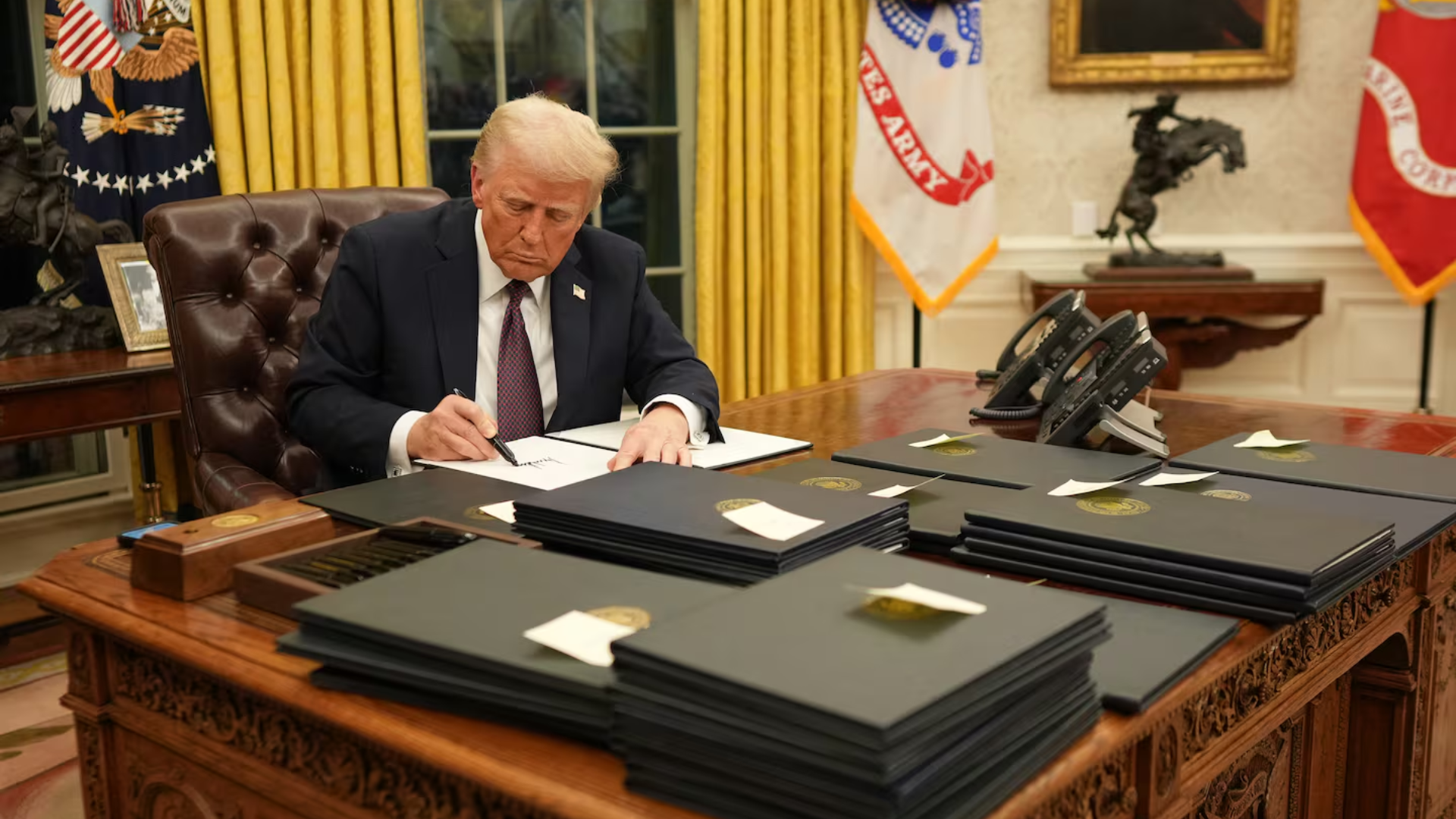
Image: The Boston Globe
President Trump on Monday threw the Inflation Reduction Act’s (IRA) Home Energy Rebates programs into limbo, signing an executive order requiring the Department of Energy to “immediately pause the disbursement of funds” under the law.
The big picture: The IRA allocated nearly $9 billion for states to provide point-of-sale rebates to homeowners who make qualified HVAC upgrades.
- 12 states, including D.C., have programs up and running as of January 17, while all remaining states, excluding South Dakota, have been “awarded” funds and await approval to launch their programs.
- Map of state statuses
What’s happening: Trump’s executive order, fulfilling his promise to curb IRA spending, requires the DOE to pause disbursements for 90 days while it “reviews its processes” for awarding funds and reports its findings.
- The dilemma: The order’s wording — “disbursements” — leaves unclear whether it affects the 12 states with active programs.
- These states have contractual rights to the funds, and if they try to provide homeowners rebates during the 90-day pause and get denied, they’ll likely file lawsuits, Alex Ayers, HARDI’s VP of Government Affairs, tells Homepros.
Of note: Rather than receiving cash, states tap into a government account, where the funds sit, to reimburse homeowners when qualified installs are made.
- For the 38 states that have been awarded funding but haven’t launched their programs, “the approval… is likely to take longer than the 90-day pause caused by the executive order,” Ayers added, easing concerns for these states.
What to watch: Neither the administration nor the DOE have clarified if the order affects active states, but “ideally if there’s an issue, the state will announce [it],” said Ayers.
- The DOE didn’t respond to a request for comment.
Keep reading

Carrier, Lennox report Q3 earnings
October 30, 2023
HVAC’s dual reality: Growing interest, 40,000 job openings
A conversation about the HVAC industry's labor situation, including the nationwide surge in interest, annual projected job openings, and more

32 minutes with HVAC Uncensored’s Gil Cavey
December 15, 2023
