Trump takes another shot at low-income HVAC program
The Low Income Home Energy Assistance Program (LIHEAP) assists roughly 6.7 million households with utility bills, weatherization projects, and HVAC repairs and replacements

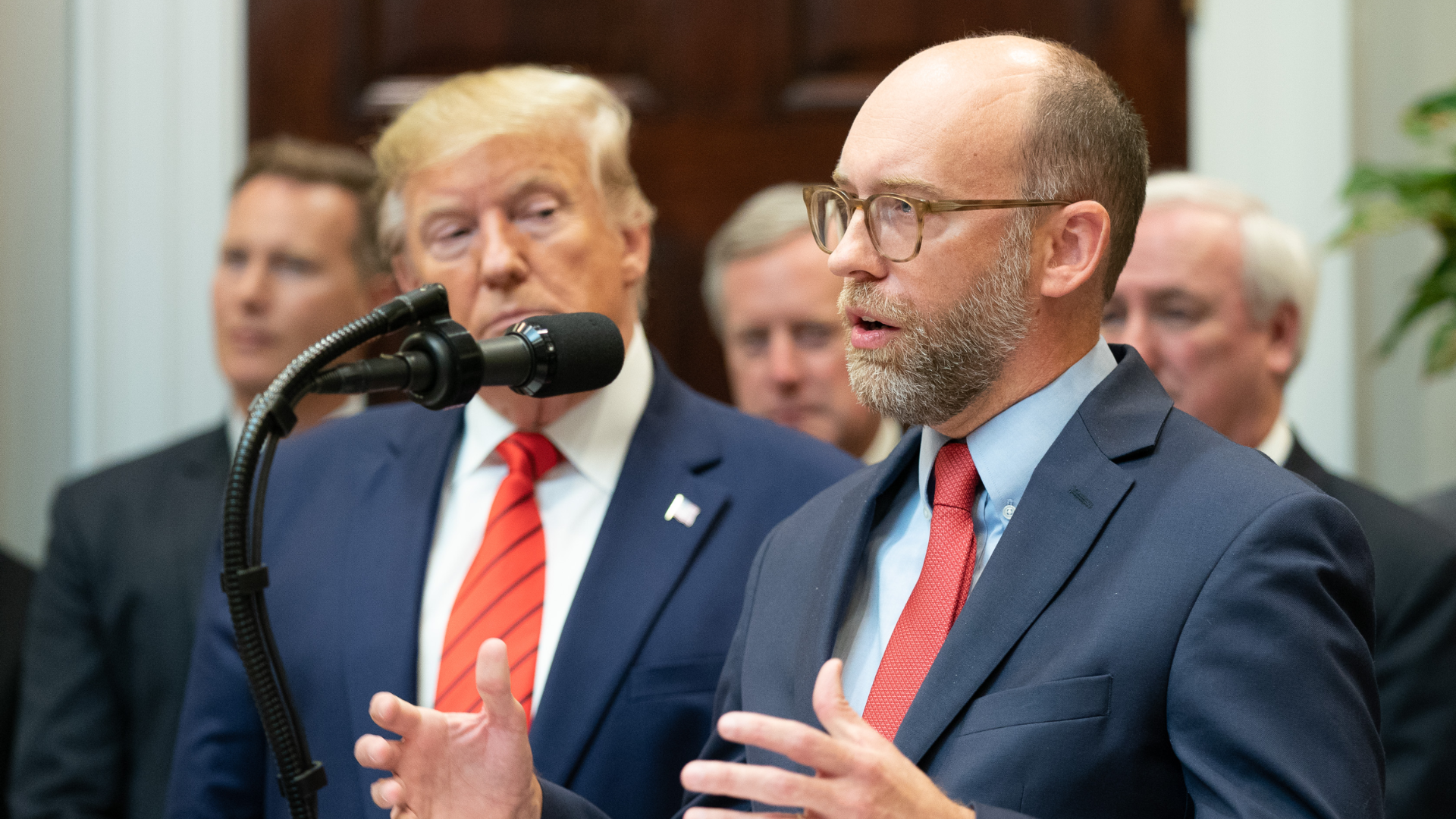
Image: The White House / Wikimedia Commons
On April 3, the Trump administration released its budget proposal for fiscal year 2027, including a suggestion to eliminate a program that helps low- and fixed-income families cover HVAC-related expenses.
What’s happening: The Low Income Home Energy Assistance Program (LIHEAP) assists roughly 6.7 million households with utility bills, weatherization projects, and HVAC repairs and replacements via block grants that flow through states to local agencies.
- The proposal marks the president’s sixth attempt to cut the program’s budget entirely.
- Each time prior, bipartisan leaders in Congress have fought to keep the program intact and ultimately funded it with small budget increases.
What they’re saying: “LIHEAP is unnecessary because States have policies preventing utility disconnection for low-income households, effectively making LIHEAP a passthrough benefiting utility companies, particularly in the Northeast,” the budget proposal states.
- “The program rewards States such as New York and California, two of the top recipients for LIHEAP funding, which have implemented anti-energy and anti-consumer policies that drive up home energy prices,” it adds.
- It also cites past fraud, claiming that deceased individuals, prisoners, and “people with million-dollar homes” have applied for and/or received LIHEAP benefits.
The other side: The National Energy Assistance Directors Association (NEADA), a group of state leaders who administer LIHEAP funds, said in a news release that the Trump administration’s fraud claims are dated by 15 years and have since been addressed; that cutting LIHEAP would hurt people nationwide, not just in specific states; and that the reference to state shut-off protections “ignores how the program operates,” as they don’t eliminate debts.
- “This proposal comes at a time when energy insecurity is already at alarming levels,” the news release states. “Currently, one in six U.S. households is behind on their energy bills, with total utility debt reaching approximately $25 billion — the highest level since 2021 and a 30 percent increase since the end of 2023.”
What we’re watching: While the president typically proposes a budget early in each calendar year, the power of the purse ultimately lies with Congress.
- Over the next few months, proposed funding will be divided among 12 subcommittees, which will hold hearings. The House and Senate must pass a single version of each funding bill before sending it to the president to sign or veto.
- The federal government’s fiscal year begins every October 1.
Keep reading

Strongpoint Services CEO on the power of outbound efforts
A conversation about outbounding, cross-trade bookings, and the replacement environment

SF&P Advisors CEO on the HVAC M&A market
A candid conversation about the state of the M&A market, including buyer demand, EBITDA multiples, and what's next
EPA plans to scrap Energy Star program
As part of a broader restructuring, the EPA plans to eliminate two of its divisions, including the one that oversees Energy Star
